
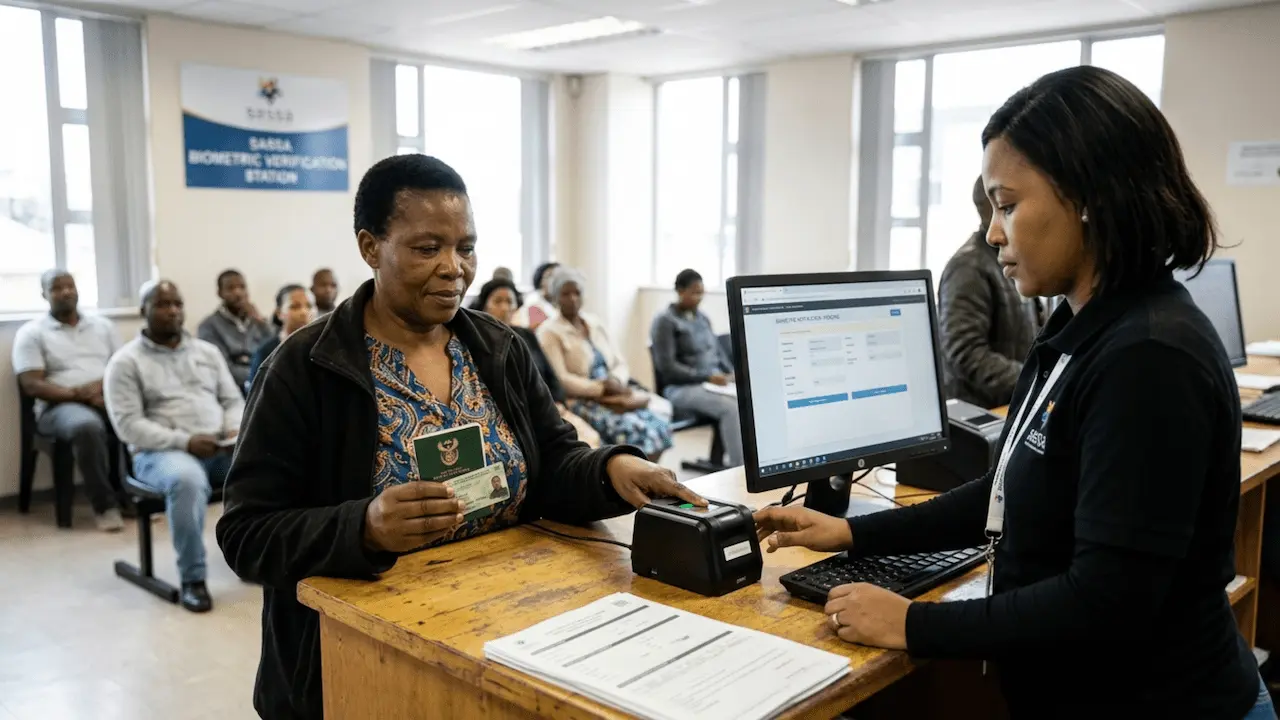
SASSA’s biometric verification program has placed nearly one million beneficiaries and applicants through identity checks since September 2025, with official figures showing that 997,379 people had been biometrically verified at local offices by March 2026.
The rollout has also led to large-scale grant suspensions. According to the figures disclosed through parliamentary processes, 67,868 grants were suspended in the third quarter after beneficiaries failed to complete required reviews or verification steps within the set timeframes.
The development comes at a time when South Africa’s social grant system remains one of the country’s biggest public spending programs. For the 2026/27 financial year, the government has allocated R302 billion to the Department of Social Development, of which R293 billion is set aside for direct monthly social assistance grants.
Table of Contents
Why SASSA Is Using Biometric Verification
The South African Social Security Agency is using biometric verification to strengthen identity checks, reduce fraud, and ensure that grants are paid only to eligible beneficiaries. The system forms part of SASSA’s wider modernization program, which includes fingerprint checks, facial recognition, digital queue systems, and improved data matching.
The biometric rollout now covers all 432 SASSA offices. This is important because many grant services still require in-person verification, especially where online facial recognition fails or where beneficiary records do not match information held by the Department of Home Affairs.

SASSA has presented the system as a control mechanism rather than a general cancellation campaign. The agency’s position is that beneficiaries who remain eligible may continue receiving grants after completing the required verification or review process.
Key Figures From the Verification Drive
| Item | Latest Figure / Detail |
|---|---|
| Beneficiaries/applicants biometrically verified | 997,379 |
| Period covered | From September 2025 to March 2026 |
| SASSA offices covered by biometric rollout | 432 |
| Grants suspended in the third quarter | 67,868 |
| Facial biometric complaints recorded | 7,779 |
| 2026/27 Social Development allocation | R302 billion |
| Allocation for direct social grants | R293 billion |
| Queue management expansion target | 378 offices |
The suspension figure does not mean that every affected beneficiary has permanently lost their grant. In SASSA’s review process, a grant may be suspended after a beneficiary is notified to appear for review but fails to do so within the required period.
If the beneficiary still does not come forward after suspension, the grant can later lapse after a further notice period. This means beneficiaries who receive review notices must act quickly, especially if their grant is their main household income source.
Which Grants Were Most Affected?
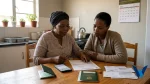
Child Support Grants made up the largest share of suspended cases in the third quarter. This is expected because the Child Support Grant has one of the largest beneficiary bases in the country.
Old Age Grants and Disability Grants were also significantly affected, indicating that the verification drive is not limited to a single grant category. SASSA has been conducting income checks and eligibility reviews across different grant types as part of tighter compliance controls.
| Grant Type | Number Suspended |
|---|---|
| Child Support Grant | 37,825 |
| Old Age Grant | 20,429 |
| Disability Grant | 7,908 |
| Other grant categories | Balance of reported cases |
| Total reported suspensions | 67,868 |
The high number linked to the Child Support Grant also underlines the scale of the review process. SASSA has been checking income eligibility for millions of recipients, with around 6 million beneficiaries participating in strengthened verification and review activities.
Why Beneficiaries Are Failing Verification
SASSA has identified several reasons behind non-verification cases. In many cases, the problem is not proven fraud but failure to respond to official notices, incomplete life certification, or unsuccessful online facial checks.
Some beneficiaries face practical barriers. These include poor internet connectivity, bad lighting during facial recognition attempts, outdated records, or missing biometric information in Home Affairs systems. These problems can delay verification even when the beneficiary is legitimate.
The main reasons for failed or incomplete verification include:
- Beneficiaries not responding to SASSA review notices on time.
- Life certification is not being completed when required.
- Facial recognition is failing during online verification.
- Poor lighting, unstable internet, or low-quality device cameras.
- Biometric records missing or not matching Home Affairs data.
- Beneficiaries not visiting a local office after being redirected for fingerprint checks.
Where online facial recognition fails, beneficiaries are usually redirected to a SASSA office for fingerprint biometric verification. According to available figures, complaints were recorded against the electronic facial biometric system, whereas no formal complaints were reported through official channels regarding fingerprint verification.
What Happens Before a Grant Is Suspended?
SASSA’s suspension process follows a staged system. A beneficiary is first notified to complete a review or verification process. If the person does not respond within the required period, the grant may be suspended.
The grant is not supposed to lapse immediately after the first notice. The beneficiary still has a chance to come forward and complete the required checks. If the beneficiary ignores the suspension and still does not complete the review, the grant may lapse after a further notice period.
This distinction matters because many beneficiaries confuse suspension with permanent cancellation. Suspension is a warning stage. Lapsing is more serious because the beneficiary may then have to go through a longer reinstatement or reapplication process, depending on the case.
What Beneficiaries Should Do Now
Beneficiaries who receive a SASSA review notice should not ignore it, even if their grant has been paid regularly for years. The review system is being applied more strictly, and non-response is now one of the major reasons for suspension.
They should also keep their mobile number up to date, as many notices and verification instructions are linked to contact details. A changed or inactive number can cause beneficiaries to miss important communication.
Beneficiaries can reduce the risk of suspension by doing the following:
- Respond to SASSA notices as soon as they are received.
- Visit the nearest SASSA office if facial verification fails online.
- Carry a valid South African ID or required identification document.
- Keep contact details updated with SASSA.
- Complete life certification or review checks within the required period.
- Use only official SASSA channels and avoid unofficial “agents” offering paid help.
Beneficiaries can also check verified updates through the official SASSA website or follow announcements from the agency’s official X handle.
SASSA Says Controls Have Already Saved Over R1 Billion
The Department of Social Development has said tighter grant reviews and fraud-prevention controls have already produced savings of more than R1 billion. These savings are being presented as evidence that stronger verification can reduce leakage in the social assistance system.
The concern, however, is operational pressure. A stricter system may protect public funds, but it can also create delays if local offices are crowded, digital systems fail, or beneficiaries do not fully understand the process.
This is why communication is now a key issue. The department has said SASSA uses existing statutory notification procedures and continues to expand awareness campaigns, but it also confirmed that no standalone research report has been completed on the effectiveness of communication during the rollout.
Digital Queue System and Office Modernization
SASSA is also expanding its queue management system from 113 offices to 378 offices, with the remaining rollout expected in the current financial year. This is meant to reduce overcrowding and improve the movement of beneficiaries at local offices.
The agency has faced long-standing complaints about overnight queues, repeated office visits, system downtime, and beneficiaries being turned away without assistance. These problems become more serious during grant reviews, card issues, biometric checks, and high-demand payment periods.
The digital queue system is designed to organize beneficiaries by service type and to help office managers monitor waiting times. It may not remove queues immediately, but it gives SASSA a better way to control foot traffic and prioritize vulnerable beneficiaries.
Recent SASSA Developments Beneficiaries Should Know
SASSA has also announced its 2026/27 social grant payment schedule. For May 2026, Older Persons Grants were scheduled for 5 May, Disability Grants for 6 May, and Children’s Grants for 7 May. The agency has said the general principle is to pay grants as early in the month as possible, while avoiding weekends, public holidays, the first day of the month, and Mondays where necessary.
Grant amounts also increased from April 2026. Older Persons, Disability and Care Dependency Grants increased by R80 to R2,400. The War Veterans Grant increased to R2,420, the Foster Child Grant rose to R1,290, and both the Child Support Grant and Grant-in-Aid increased by R20 to R580.
The Social Relief of Distress grant has also been extended until March 2027. The government has allocated an additional R36.4 billion to continue the SRD grant, which is expected to support around eight million working-age people who are unable to support themselves.
Another recent development is SASSA’s warning against the illegal sale of queue positions at its offices. The agency described the practice as unlawful and exploitative, especially because it targets vulnerable people who depend on social assistance for survival.
SASSA is also developing more self-service digital options. These may eventually allow beneficiaries to complete online identity verification, receive personalized communication, and conduct some grant reviews remotely. As this digital footprint expands, the department has said it will strengthen cybersecurity to protect beneficiary information.
Hlo I just want to know what I must do because every time when I want to check my status the same thing happens I D verification but I lost my SIM card for my srd grand a long time ago please I need help
Hlo I just want to know what I must do because every time when I want to check my status the same thing happens I D verification but I lost my SIM card for my srd grand a long time ago please I need help
They stopped paying my old age pension last year in November, I have send numerous emails, went to Soshangove 3 times with all documents that was verified by the SAPS , called them, but they could not tell me why I'm under investigation. They either ignore you or say sorry we can't help you. I'm almost 72 years old, I really struggle to survive. My stress levels are sky high. My late husband took his own life, and therefore no life insurance paid out. I was celling off goods to pay some outstanding debt and to survive. I was in such a state after his passing and helped by a man called Alex at Hartebeespoort to apply for my pension, I paid him R1,600-00 to do my application for me. My daughter took me in and looked after me for a couple of months. My house was sold on an auction to pay all other outstanding debts in the estate. I have no hidden money or any other income. Can anyone please tell me what to do?
Hi Jacky i want to know what should i do when my child support was stop due to my twins had turn 18, the 14th May they still in school an in grade 9 standard 7 what am i to do. Their bus to school is already r1000 and me and the father is not working
I change my cell number to time bank account last year November but only get from last year December but all my dates from 2022 was a proof with dates before I changed to time bank
Hi I'm also complaining about getting my srg even I didn't get nothing since I get twice in 2019 n afterwards igot nothing bt when I check my status it shows me that I've got 6months money left behind bt when go to collect it they always told me I don't have it I stil don't know why.but when they check it is there since 2019 until it says pending since. Plz help me
Good morning fellow South Africans. I have been receiving the SRD Grant from the beginning because we are unemployed, but this year I changed my bank account because Standard Bank became too much for me – I couldn’t even afford to renew a R140 feature card. Then SASSA told me my application was declined because they say I’ve been getting an income. I want proof of this income because I haven’t been working, yet money has been going into my bank account. Now I’m waiting for a response on the SRD relief fund that I probably won’t get, because we all know we as South Africans must always beg the government in power to help us, even though it’s their job. Now I have to go to SASSA without even a cent for taxi fare to fix something that was never broken. Who’s going to pay me back or help me repay the loan I took to go there? Instead, they mess things up just to steal from us. I’m declined because they say I have an income. How long must I, as a South African, sit back and take this nonsense from people who are supposed to help us but keep breaking us down? Take that relief fund you’re stealing from us and start rebuilding our parks, and help those of us who have been signing up for RDP houses since the very beginning but still hear “no” as phases 2, 3, 4, 5, 6, 7, 8 come and go. I’m turning 41, still without that RDP house. How does our government expect us to be crime-free when they say we must respect the law, yet they don’t care to protect or help us? I’m sorry, but I’ve had enough of going to interviews and being told “sorry, you don’t fit our profile” while someone with no experience gets the job. I’m done with this government.
I just want to know if I will get every Month my Sassa old age grant payment.
Hi in my opinion they might just steal your money and say they working on it