
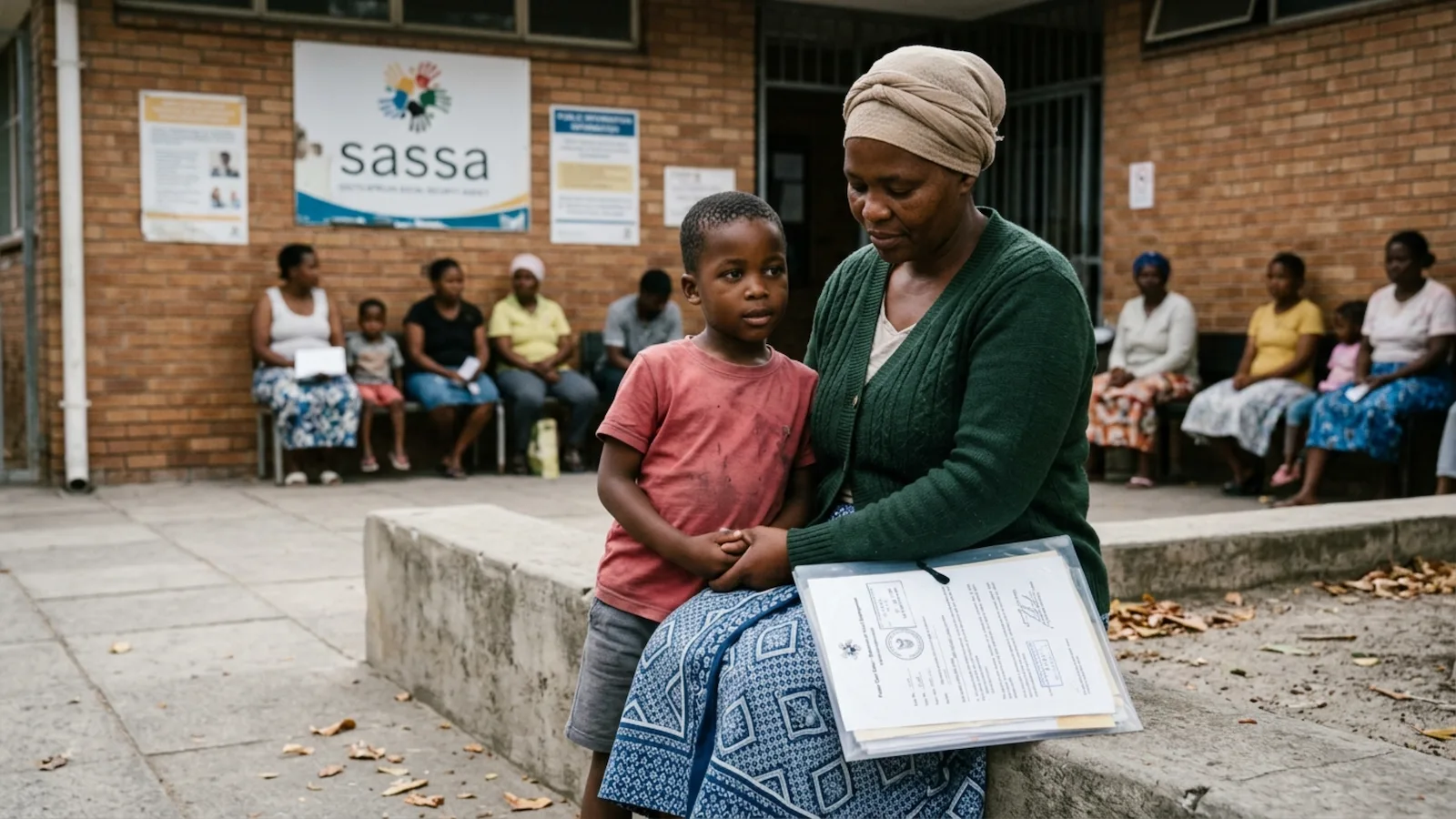
The SASSA Foster Child Grant is a monthly payment intended to help foster parents care for children placed in their care through a court process. It is aimed at children who need protection and care, such as those who are orphaned, abandoned, at risk, abused, neglected, or otherwise found to be in need of care and protection through the Children’s Court process. For many foster parents, the most confusing part is determining whether they qualify and which documents to take to a SASSA office.
Table of Contents
What is the Foster Child Grant?
A Foster Child Grant is paid to the foster parent of a child who has been legally placed in foster care by a court. The grant is paid per child. According to the official government service page, the Foster Child Grant is R1,290 per month per child. You can read the official guide on the Government of South Africa website via the Foster child grant service page.
Who qualifies for the Foster Child Grant?

To qualify, the foster parent (applicant) must generally meet the following requirements:
- Be a South African citizen, permanent resident, or recognized refugee living in South Africa
- Live in South Africa with the foster child
- Ensure the foster child remains in their care
- Have a valid court order confirming the foster care placement
- The child is usually under 18, but the grant can be extended in certain cases while the child remains in an educational institution (as explained in SASSA’s services guidance)
SASSA also notes that the Foster Child Grant is not means-tested, meaning the foster parent’s income is not used in the same way it is for many other grants.
📢Qualifying Criteria| Foster Child Grant
Want to apply for a Foster Child Grant but unsure where to start?View this poster to understand the qualifying criteria and required documents when submitting your application#FosterChildGrant #ChildProtection360… pic.twitter.com/KbuPLoiEGu
— SASSA (@OfficialSASSA) June 2, 2026
Key rules to note
| Topic | What it means in practice |
|---|---|
| A court order is essential | Without a valid order confirming foster care placement, SASSA cannot finalize the grant. |
| The child must remain in your care | If the child is no longer in your foster care, the grant can lapse. |
| Reviews and renewals | The grant is linked to the court order period and is reviewed upon its expiration. |
| Extension beyond 18 | SASSA indicates that the grant may continue until age 21 if the young person remains in an educational institution and the required proof is submitted. |
For SASSA’s wording on foster grants, including the rule about continuing up to age 21 in education, see the SASSA Services FAQs.
Required documents for a Foster Child Grant application

SASSA’s poster lists the documents applicants are expected to bring when applying. The most common requirements include:
- Certified copy of a valid 13-digit barcoded ID for the applicant (and spouse if married), or acceptable alternative identification if an ID is not available
- Certified copy of the foster child’s birth certificate (13-digit if applicable)
- If a refugee: certified copy of a valid Section 24 refugee permit
- Proof of marital status (for example, marriage certificate, death certificate of spouse, divorce decree, or affidavit if deserted)
- Bank account confirmation letter or three months’ bank statements for the account where the payment will be made
- Valid court order confirming foster care placement
- If the child is school-going (especially ages 7 to 18): proof of school attendance (SASSA notes that not submitting this proof does not automatically mean refusal)
- If the young person is over 18 and still in school, proof of school attendance may be requested for continuation
How to apply for the Foster Child Grant?
Applications are typically done in person at a SASSA office.
- Visit your nearest SASSA office with the required documents, including the court order placing the child in your care.
- Complete the application form in the presence of a SASSA official.
- Get a receipt as proof of application.
- SASSA processes the application. The Government of South Africa service page notes it may take up to three months. If approved, payment is backdated to the date the court placed the child in your care (as set out on the official service page).
How payments are made
The official government service page explains that SASSA can pay the grant through:
- Cash at a specific pay point on a stated day
- Electronic deposit into a bank or Postbank account (bank charges may apply)
- An institution acting as an administrator (such as a welfare organization)
When the grant may be reviewed, suspended, or lapse

The grant is closely tied to the foster care court order. A review often happens when the court order period ends. The grant may be suspended if, for example, circumstances change, the outcome of a review affects eligibility, or there is suspected misrepresentation. It may lapse in cases such as the death of the child or the last living foster parent, admission of the child to a state institution, or if the child is no longer in foster care (as outlined on the Government of South Africa service page).

What happen with other2 months money
Hii I am tracyann I didn't pay for2 months for my2 children will I still pay when I go to sassa to review
I am a 72yr old . I receive pension& now my daughter passed away and the child grant is now paid to me as I am the only surviving family to them. Do I now get foster care grant. And how do I apply.
My child is in foster care now
Does that mean that the child grant will also be included with the foster money being paid