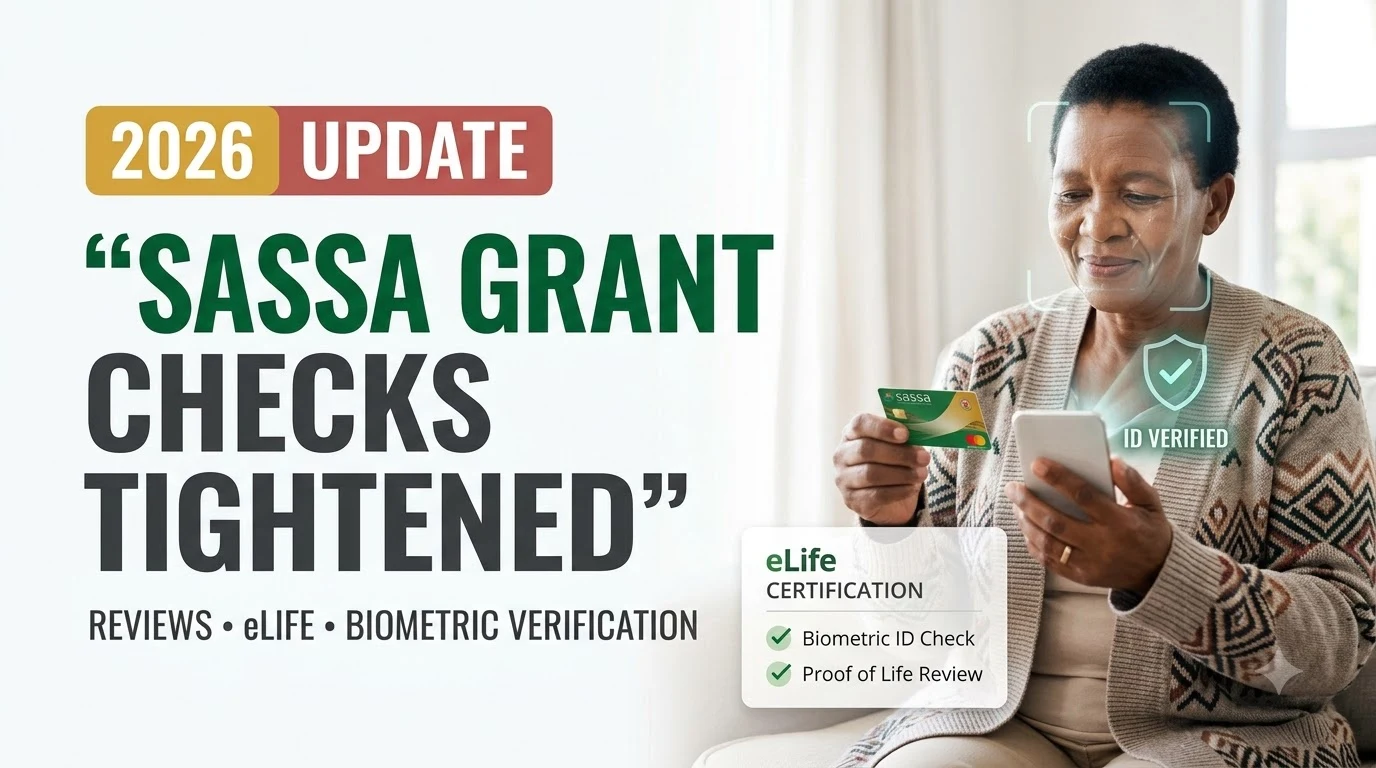
SASSA has confirmed that it is strengthening social grant controls across South Africa as part of a wider effort to prevent fraud, incorrect payments and grants being paid to people who no longer meet eligibility requirements.
In a media statement issued on 9 October 2026, the South African Social Security Agency said it had intensified social grant reviews, eLife Certification and beneficiary biometric enrolment. The agency stressed that these measures are not intended to remove legitimate beneficiaries from the social assistance system.
Instead, SASSA says the stronger checks are designed to ensure that grants continue to go to the correct people and that beneficiaries still meet the requirements for the grants they receive.
For millions of South Africans who depend on social grants, the announcement raises several important questions: Who may be called for a review? What information must beneficiaries keep updated? What is eLife Certification? And could a grant be affected if verification is not completed?
Here is what beneficiaries need to know.
Table of Contents
Why Is SASSA Strengthening Social Grant Checks?

SASSA’s latest statement follows concerns about money reportedly paid to beneficiaries who were allegedly ineligible for social grants during the 2025/2026 financial year.
[MEDIA STATEMENT]
SASSA STRENGTHENS SOCIAL GRANT CONTROLS TO PROTECT THE INTEGRITY OF THE SOCIAL ASSISTANCE SYSTEM
09 October 2026 https://t.co/DMSH52wsgm
— SASSA (@OfficialSASSA) October 9, 2026
The matter also came under scrutiny before Parliament’s Portfolio Committee on Social Development in October 2026.
SASSA says social assistance remains a critical safety net for vulnerable South Africans, but the system must also be protected against:
- Fraud
- Abuse
- Incorrect payments
- Misrepresentation
- Identity theft
- Payments to people who no longer qualify
- Payments involving deceased beneficiaries
- Unlawful access to another person’s grant
The agency, therefore, wants beneficiary information and eligibility to be checked more actively rather than relying indefinitely on information supplied when a grant was originally approved.
Does This Mean SASSA Is Cancelling Grants?
No. SASSA has specifically stated that the intensified review and certification processes are not designed to arbitrarily terminate social grants.
A legitimate beneficiary who continues to meet the eligibility requirements should not automatically lose a grant merely because SASSA conducts a review.
However, social grants are subject to eligibility conditions. A person’s circumstances can change after approval, and SASSA may review a grant to establish whether those conditions are still being met.
This distinction is important.
The new controls should therefore be viewed as stronger verification rather than a general cancellation of grants.
Who Could Be Called for a SASSA Grant Review?
Not every beneficiary will necessarily be reviewed at the same time.
SASSA uses grant reviews to establish whether beneficiaries continue to qualify for the assistance they receive. A beneficiary may therefore be contacted where updated information or additional verification is required.
Reviews may become particularly relevant when information available to SASSA indicates that a person’s circumstances could have changed.
For example, a beneficiary may need to provide updated information regarding income, employment, family circumstances, banking details, or residential information.
Beneficiaries who receive an official instruction from SASSA to complete a review should not ignore it.
Changes Beneficiaries Must Report to SASSA
One of the clearest points in SASSA’s October statement is that beneficiaries are also responsible for keeping their information up to date.
Changes that may affect eligibility can include:
Changes in income
If a beneficiary’s income changes substantially, it could affect eligibility for grants subject to a means test or income limits.
Employment changes
Starting employment or experiencing another significant change in employment circumstances may need to be reported where it affects grant eligibility.
Marital status
Changes such as marriage or other relevant household circumstances can affect the financial information considered for certain grants.
Banking details
Beneficiaries should ensure that their banking information remains accurate, particularly where grants are paid directly into bank accounts.
Residential circumstances
Changes to a beneficiary’s address or living circumstances may also need to be updated.
Other personal circumstances
Any material change that could affect whether a person continues to meet the requirements of a grant should be disclosed to SASSA.
What Is a SASSA Social Grant Review?
A social grant review is an administrative process used by SASSA to confirm that a beneficiary still qualifies for the grant.
A review may involve checking information such as:
- Identity details
- Income
- Financial circumstances
- Medical circumstances, where applicable
- Marital status
- Banking information
- Personal circumstances
- Continued compliance with grant requirements
SASSA has said that reviews are part of its responsibility to protect public funds while ensuring that qualifying people continue to receive assistance.
Grant reviews are not entirely new. SASSA has been strengthening its review programme for some time, with the process becoming more prominent during 2025 and 2026.
What is SASSA eLife Certification?
eLife Certification is another major part of SASSA’s strengthened verification system.
The purpose is essentially to confirm that a beneficiary is still alive and that the person associated with the grant remains the legitimate recipient.
This is particularly important because SASSA must prevent situations in which grants continue to be paid after a beneficiary has died or when another person unlawfully accesses the grant.
The eLife system allows certain beneficiaries to complete life certification digitally rather than always having to travel to a SASSA office.
SASSA’s online system uses electronic identity verification, including biometric technology, to confirm identity.
Why is eLife Certification Important?
SASSA says life certification can help prevent payments in circumstances where:
- A beneficiary has died.
- There is uncertainty about whether a beneficiary is still alive.
- Another person may be accessing the beneficiary’s grant.
- SASSA needs additional confirmation of a beneficiary’s identity.
The system is also intended to make verification easier for eligible beneficiaries who may otherwise have to travel to a SASSA office.
This can be particularly useful for older persons, persons with disabilities and people living far from SASSA service points.
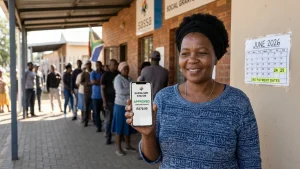
How to Complete SASSA eLife Certification Online
Where a beneficiary has been instructed to complete eLife Certification, the process can generally be completed through SASSA’s Online Services Portal.
The process typically involves:
- Opening the official SASSA Online Services Portal.
- Logging in or following the verification instructions provided.
- Confirming that personal information is correct.
- Completing the electronic identity verification process.
- Follow the on-screen instructions for biometric verification.
- Completing the certification and retaining any confirmation provided.
Beneficiaries should use only official SASSA channels and be cautious about links from unknown numbers or social media accounts.
Is eLife Certification Required for Every SASSA Beneficiary?
Beneficiaries should distinguish between SASSA expanding its eLife system and every grant recipient automatically being required to complete the same process immediately.
SASSA can target verification where it is required.
Therefore, beneficiaries should follow official communication sent specifically to them rather than assuming that every social grant recipient must report to a SASSA office immediately.
If SASSA instructs a beneficiary to complete life certification or another verification process, however, that instruction should be taken seriously.
What Is SASSA Biometric Enrolment?
SASSA is also strengthening beneficiary biometric enrolment.
Biometric verification uses unique physical characteristics associated with an individual to help confirm identity. Depending on the system being used, this can involve facial or other biometric checks linked to official identity records.
The objective is to make it substantially more difficult for somebody to impersonate a genuine beneficiary or fraudulently access a social grant.
SASSA says biometric enrolment strengthens its ability to establish who a beneficiary actually is and improves the security of social grant transactions.
Why Is SASSA Using More Biometric Verification?
Identity fraud is a significant risk in a social assistance system handling payments for millions of people.
Biometric checks can help SASSA detect or prevent:
- Identity theft
- Impersonation
- Duplicate claims
- Fraudulent applications
- Unauthorised access to grants
- Payments being collected by the wrong person
The agency has also been integrating identity verification more closely with government systems, including those that hold information from the Department of Home Affairs.
What Happens If SASSA cannot Verify Your Identity?
A failed biometric check does not necessarily mean that a person is ineligible for a grant.
There can be circumstances in which identity information cannot be matched immediately or additional verification is necessary.
A beneficiary may then be instructed to complete further identity verification or provide additional information.
The important point is to respond to legitimate SASSA requests and resolve the verification issue rather than ignoring it.
Beneficiaries should also ensure that their identity and personal records are accurate.
Can SASSA Stop a Grant After a Review?
A review itself does not mean that a grant will be stopped.
However, the purpose of a review is to establish whether the beneficiary continues to qualify. If SASSA determines that eligibility requirements are no longer met, the grant may be affected in accordance with applicable rules and procedures.
Problems may also arise when a beneficiary who has been formally asked to complete a required review fails to cooperate with the process.
This is why beneficiaries who receive an official review notice should act promptly.
What Should Beneficiaries Do Now?
There is no reason for beneficiaries who have not received a review or verification request to panic or rush unnecessarily to a SASSA office.
Instead, grant recipients should take a few basic precautions:
- Keep their mobile number and contact information up to date.
- Make sure SASSA has accurate personal information.
- Keep banking details current.
- Report material changes in income or employment.
- Report relevant changes in marital or household circumstances.
- Respond to an official grant review notice.
- Complete eLife Certification when officially requested.
- Complete biometric verification when required.
- Avoid giving personal information to people who claim to be SASSA representatives without first verifying the request.
- Use official SASSA platforms whenever completing online verification.
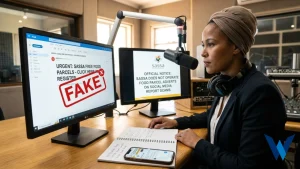
Beware of SASSA Verification Scams
Periods of major SASSA verification activity can also create opportunities for scammers.
Beneficiaries should be suspicious of messages claiming that a grant will be cancelled immediately unless they click an unfamiliar link, disclose a PIN or provide banking passwords.
SASSA beneficiaries should never casually share:
- Bank PINs
- Internet banking passwords
- Card PINs
- One-time passwords with unknown persons
- Full banking credentials
A legitimate identity or grant verification process should not require a beneficiary to hand over confidential banking security credentials to an unknown individual.
Why SASSA Says These Checks Are Necessary
South Africa’s social grant system supports millions of people every month and distributes substantial amounts of public money.
That scale makes accurate beneficiary records critical.
SASSA argues that it cannot continue to rely indefinitely on historical information because people’s financial circumstances, personal details, identities, and payment arrangements change.
Stronger reviews, therefore, form part of a broader shift towards continuously verifying that the right person receives the right grant.
At the same time, these measures place greater responsibility on SASSA to ensure that legitimate beneficiaries are not incorrectly excluded due to administrative problems, outdated records, or difficulties completing digital verification.
Will Legitimate Beneficiaries Lose Their Grants?
SASSA’s position is clear: the strengthened controls are not intended to arbitrarily remove qualifying beneficiaries from the social assistance system.
People who remain entitled to their grants should therefore not assume that the October announcement means their payments are about to end.
The more immediate message from SASSA is that beneficiaries must cooperate when verification is required and ensure that the information held about them remains accurate.